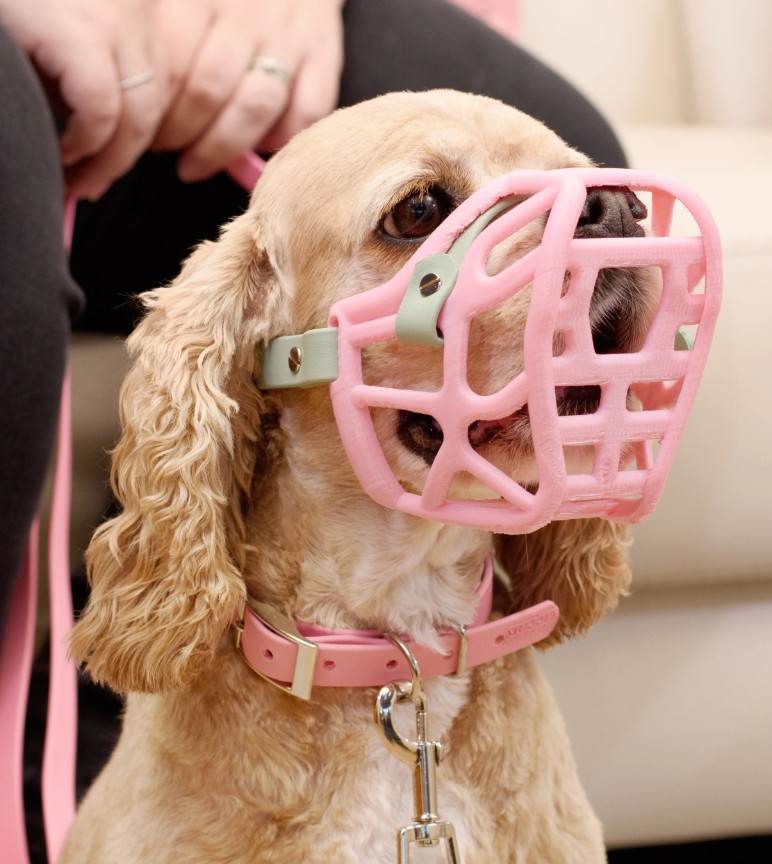
The Curious Case of the Muzzle: Failure, or Misunderstood Ally?
Wag-Wagatha Christie Investigates…
The Curious Case of the Muzzle: Failure, or Misunderstood Ally?
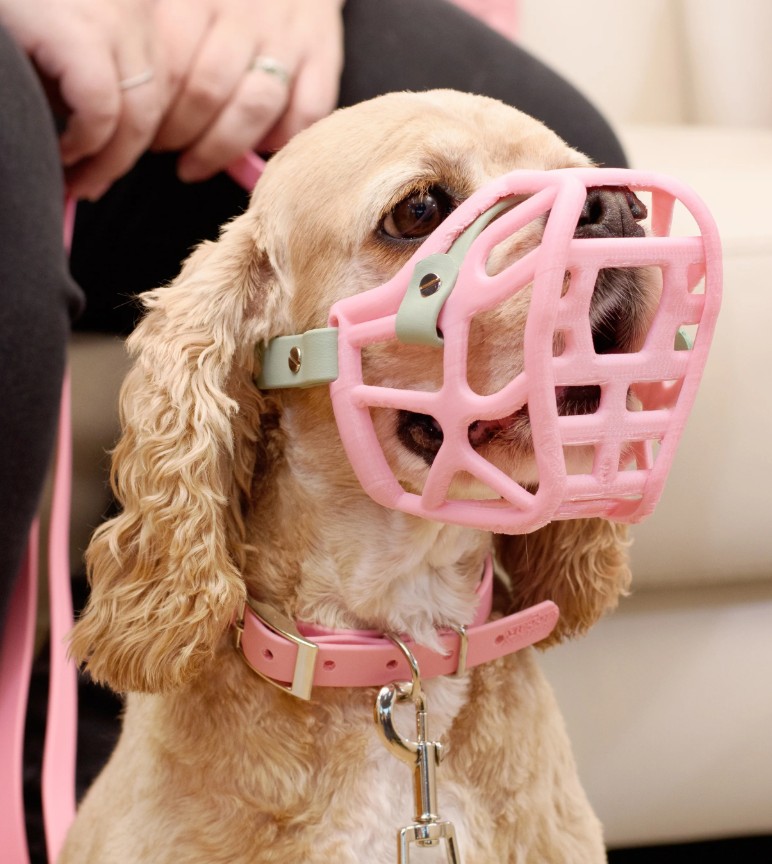
It may surprise you, dear reader, that according to National Veterinary Services, 61% of dog guardians report using muzzles for “stressful situations" – not aggression.
And 31% say vet or grooming visits are the main reason.
Add to that the rather sobering statistic that 95% of veterinary professionals will experience a dog bite during their career… and you can reasonably deduce that groomers are not far behind.
So, muzzles are clearly present in our world. But here’s the question that had even the most seasoned, behaviour-led minds in a tailspin:
Are muzzles a sign of failure in grooming… or a misunderstood tool?
The First Clue: A Shift in Perspective
I’ll confess – I was firmly in Team Failure. As a behaviour-led, holistic groomer, I believed that if I reached for a muzzle, I had failed. Failed the dog. Failed the process. Failed to create a space where that dog felt safe enough to say "yes".
Because surely, if a dog needs a muzzle… something has already gone wrong? And yet… experience has a funny way of challenging certainty.
The Bigger Picture: How Did We Get Here?
Traditionally, grooming has been outcome-focused. Clean feet. Even lines. Perfect finish. Training reflects that – how to achieve the best haircut efficiently and safely. And safety matters. Of course it does. No groomer should be put at risk of injury. So muzzles became a tool for protection, a way to get the job done.
But somewhere along the line, the dog’s experience got lost in the process. Dogs who struggled weren’t seen as overwhelmed, in pain, or communicating discomfort…
They were labelled:
“Difficult”
“Naughty”
“Aggressive”
And the muzzle? It became the full stop at the end of that sentence.
When Does a Muzzle Support… and When Does It Silence?
Here’s where things get murky. Used reactively, when a dog is already over threshold, a muzzle can become:
A way to ignore communication
A tool to push through discomfort
A signal to the dog that their voice doesn’t matter
It’s like bolting the stable door after the horse has fled. At that point, the dog isn’t learning to feel safe. They’re learning they have no choice. And that’s where we must draw a firm, unwavering line:
If you wouldn’t do it without the muzzle… don’t do it with one.
If the dog hasn’t been positively trained to wear it… don’t use one.
Because a muzzle should never be a green light to override consent.
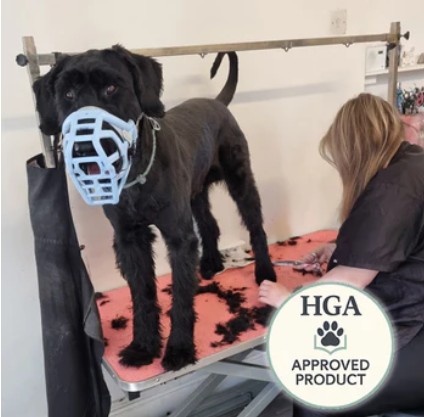
Is the Behaviour the Problem… or the Clue?
We’ve all heard it: “It came out of nowhere.” But behaviour rarely does.
What’s often missed are the whispers before the shout:
Lip licks
Subtle tension
A shift in posture
Heightened awareness
Then add in a little trigger stacking:
A stressful vet visit yesterday
Poor sleep from fireworks
A reactive encounter on the way in
And now… a grooming table, restraints, and a slicker brush. Frankly, I’d react too. This isn’t a “bad” dog. This is a dog saying, "I can’t cope.” And when we ignore that? We either get escalation…or shutdown.
Neither is consent.
And Then There’s Pain…
Pain changes everything. It can turn a tolerant dog into a reactive one overnight. And the fear of pain? Just as powerful. One small association – a pull, a nick, a memory – and suddenly grooming becomes something to brace against. Again, not disobedience. Not dominance. Just survival.
The Verdict: Do Muzzles Have a Place?
Now here’s where the plot thickens…because the answer isn’t a simple yes or no.
It’s yes – with intention, skill, and respect.
Case Files from the Grooming Room
Case One: The Rescue Dog
A dog arrives already wearing a well-fitted, non-restrictive muzzle.
She trusts her handler, but not me. Not yet.
She takes treats. Allows gentle touch. But her ears? Off-limits.
I could push. I could persist. But what would that cost?
Instead, I step back. Guide the handler. Protect the trust already built.
Because removing the matts isn’t the priority.
Maintaining trust is.
Case Two: The Muzzle-Trained Dog
This dog knows his muzzle. Accepts it. No fear, no fuss.
I use it occasionally — not because I need it, but to keep it normal.
But when it comes to his paws — the trigger point — I don’t rely on the muzzle.
I build trust.
I teach cooperation.
I give him choice.
And in doing so… he no longer needs to use his voice quite so loudly.
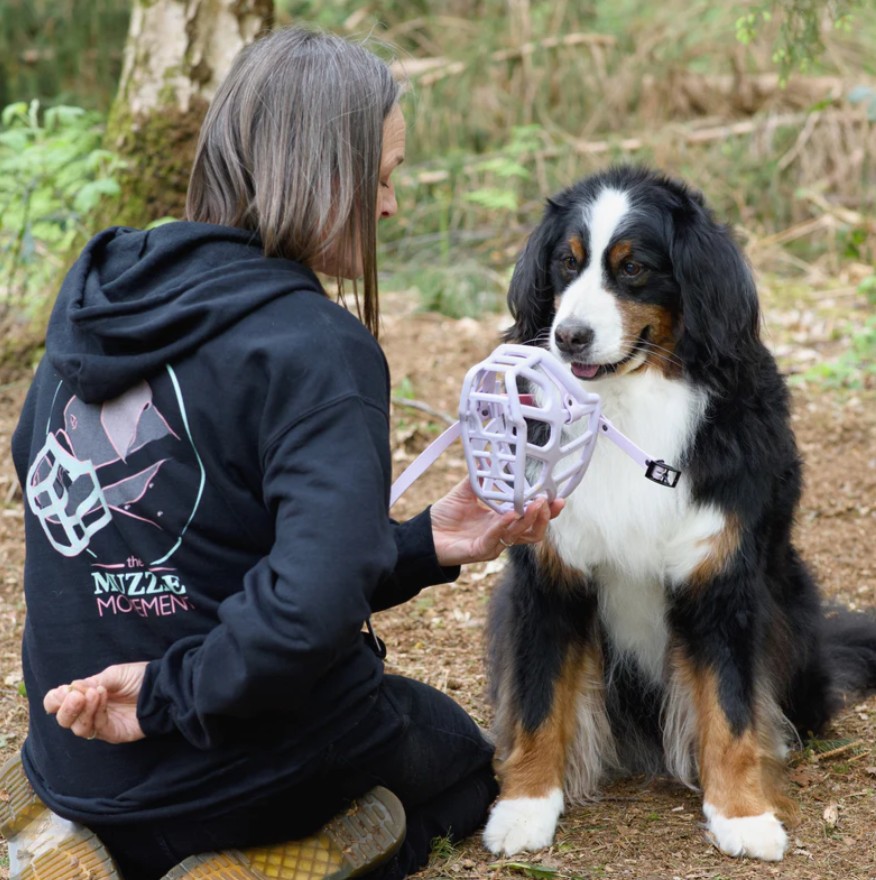
The Final Clue: Reframing the Muzzle
When introduced positively, a muzzle becomes the following:
✔️ A life skill
✔️ A coping tool
✔️ A predictable, safe routine
Not a punishment.
Not a restraint.
Not a silencer.
Think of it as a seatbelt – not a steering wheel. It’s there for safety. Not to control the journey.
Closing the Case
So… are muzzles a sign of failure? They can be. If used to override, rush, or ignore. But they can also be something else entirely. A bridge, a support, a quiet “just in case".
The difference? How - and why - they’re used. Because in consent-based grooming, the goal isn’t just a well-groomed dog. It’s a dog who feels safe enough…to say yes.
Yours Truly,
Wag-Wagatha Christie
To Find Out More
Click link: Muzzle Training - Muzzle Training for Every Dog – Just in Case– The Muzzle Movement
References
National Veterinary Services (NVS) (2023) Challenging the stigma around dog muzzles. Available at: https://www.nvsweb.co.uk/blog/challenging-muzzle-stigma/ (Accessed: 15 April 2026).
Photos & Video courtesy of The Muzzle Movement