Incident of the Kitchen Cleaning Shampoo
Wag-Wagatha Christie Investigates...
The Curious Incident of the Kitchen Cleaning Shampoo
Dear reader, if you have been following my social media recently, you may have noticed a brand-new line of investigation entering the Wag-Wagatha Christie universe… Paw & Order.
By now, you’ve probably realised I have a deep appreciation for a good play on words, and I must admit, I was particularly proud of this addition to the family. The premise? To put dog grooming products under interrogation, examine the evidence, and deliver my verdict.
Because here’s the thing that shocked me when I first started digging deeper into the world of grooming products:
Dog grooming products are largely unregulated.

Yes, really.
In many cases, there is no legal requirement for manufacturers to disclose a full ingredient list on the bottle. Sometimes you’ll see partial ingredient lists. Sometimes none at all. And as any good detective knows, when information is missing, you have to start asking questions.
What are they hiding?
Now, let me be clear before we proceed further down this rabbit hole. This is not about fearmongering, villainising brands, or claiming every product on the market is harmful. The truth, as with most investigations, is far more nuanced than that.
The spark that fuelled this particular investigation came from an expert Q&A webinar inside The Holistic Dog Grooming Club on Skool with Keri Sqibb, The Soap Coach and founder of The Dog and I.
As a dermatologically aware groomer (DAATA), I like to think I have a fairly solid understanding of what makes a safe and appropriate grooming product. But two things Keri said genuinely stopped me in my tracks:
Some dog shampoos contain ingredients also found in household floor cleaners.
Some of the harshest chemicals actually come from natural sources.
Naturally, dear reader, this sent me spiralling into a full-blown investigative obsession.
And after several hours of ingredient-list deep dives, scientific papers, cosmetic chemistry forums, and more tabs open on my laptop than I care to admit, I can confirm: Yes, I did find dog grooming products containing ingredients also used in household cleaning products.
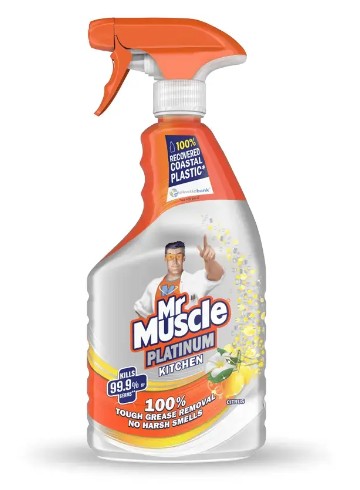
Which leads me to the question at the centre of today’s case file…
The Interrogation
Would you wash your dog with kitchen cleaner?
I suspect the answer is no.
But what if the product looked like this instead?
Cruelty Free
Paraben Free
Sulphate Free
Silicone Free
100% Vegan
SLS/SLES Free
Sounds wonderful, doesn’t it?
And yet, this particular product shared similarities in its surfactant system with ingredients commonly found in household cleaners.
The Suspects
Cocamidopropyl Betaine — an amphoteric surfactant
Polysorbate 20 — a non-ionic surfactant
PEG surfactants
Many of these ingredients are partially derived from natural raw materials, meaning they are usually considered semi-synthetic rather than entirely natural.
Now before we all dramatically clutch our pearls and throw every shampoo bottle in the bin, context matters enormously.
The Evidence
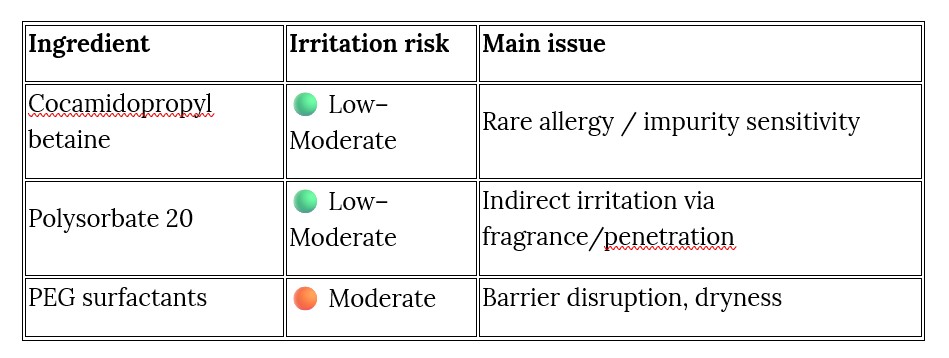
However, according to the evidence I’ve gathered so far, many grooming-related skin issues are more commonly linked to:
Heavy fragrance mixtures
Essential oils used at inappropriate concentrations
Strong sulphates such as SLS/SLES
Poor rinsing techniques
Overuse of chlorhexidine-based medicated products
Which brings us neatly to…
The Verdict
After reviewing the evidence, the jury remains out.
This case cannot be solved with a blanket “good” or “bad” label because skin health is deeply individual. A product that works beautifully for one dog may cause irritation for another.
If you are using a product containing these ingredients and your dog has healthy skin, no irritation, and no signs of discomfort, I wouldn’t panic and immediately throw it away. Thorough rinsing, avoiding overuse, and monitoring skin condition are all sensible precautions.
However, if your dog has a compromised skin barrier, underlying allergies, unexplained itching, or recurrent irritation, it may be worth investigating alternative formulations, particularly those without PEG surfactants or heavy fragrance systems.
The deeper I investigate this topic, the more I realise there are very few simple answers in canine skincare. Ingredient sourcing, formulation chemistry, concentration levels, rinsability, skin barrier health, and the individual dog themselves all play important roles.
And so, dear reader… this case remains open.
The investigation continues over on social media, where Paw & Order will continue interrogating grooming products one ingredient list at a time.
Get your first case file here.
Until next time,
Yours truly,
Wag-Wagatha Christie
This blog is intended for educational discussion only and should not replace veterinary advice or dermatological guidance for individual dogs.
Find Out More
THE DAATA-ICDG METHOD | DAATA-ICDG
https://www.daatacertification.com/es/great-herbarium
Natural Dog Nose & Paw Balms, Skin Salves | White Label Wholesale UK – The Dog and I
https://www.skool.com/theholisticgroomingacademy/about?ref=1fac041a200c4a50b4ad42ab01b885de
The Soap Coach UK - Helping UK Soap & Skincare Businesses Grow
References
Andersen, F.A. (1991) ‘Final Report on the Safety Assessment of Cocamidopropyl Betaine’, Journal of the American College of Toxicology, 10(1), pp. 33–52. Available at: SAGE Journals – Cocamidopropyl Betaine Safety Assessment (Accessed: 14 June 2026).
Ariey-Jouglard, N. (2025) The Values of the DAATA Method: Respecting the Animal, Understanding Its Needs. Available at: DAATA Values Article (Accessed: 14 June 2026).
DermNet NZ (no date) Contact allergy to cocamidopropyl betaine. Available at: DermNet NZ (Accessed: 14 June 2026).
PDSA (no date) Dermatitis (red, inflamed, sore skin or a rash) in dogs. Available at: PDSA – Dermatitis in Dogs (Accessed: 14 June 2026).
Marsella, R. (2011) ‘Advances in our understanding of canine atopic dermatitis’, Veterinary Dermatology, 22(1), pp. 3–7.
Yoshida, K., Kubo, M., and Otani, Y. (2021) ‘Evaluation of surfactants and skin barrier effects in companion animals’, Japanese Journal of Veterinary Dermatology, 30(1), pp. 6–12. Available at: J-STAGE Article (Accessed: 14 June 2026).